
Are your kitchen cabinets looking dull and sticky from stubborn grease buildup? You’re not alone.
Greasy cabinets can make your entire kitchen feel less inviting and harder to keep clean. But what if you could restore that fresh, spotless look without spending hours scrubbing or using harsh chemicals? You’ll discover simple, effective cleaning hacks that tackle grease quickly and safely.
These easy tips will save you time and effort, helping your cabinets shine like new—and making your kitchen a place you actually want to spend time in. Keep reading to unlock the secrets to grease-free cabinets and enjoy a cleaner, brighter kitchen every day.
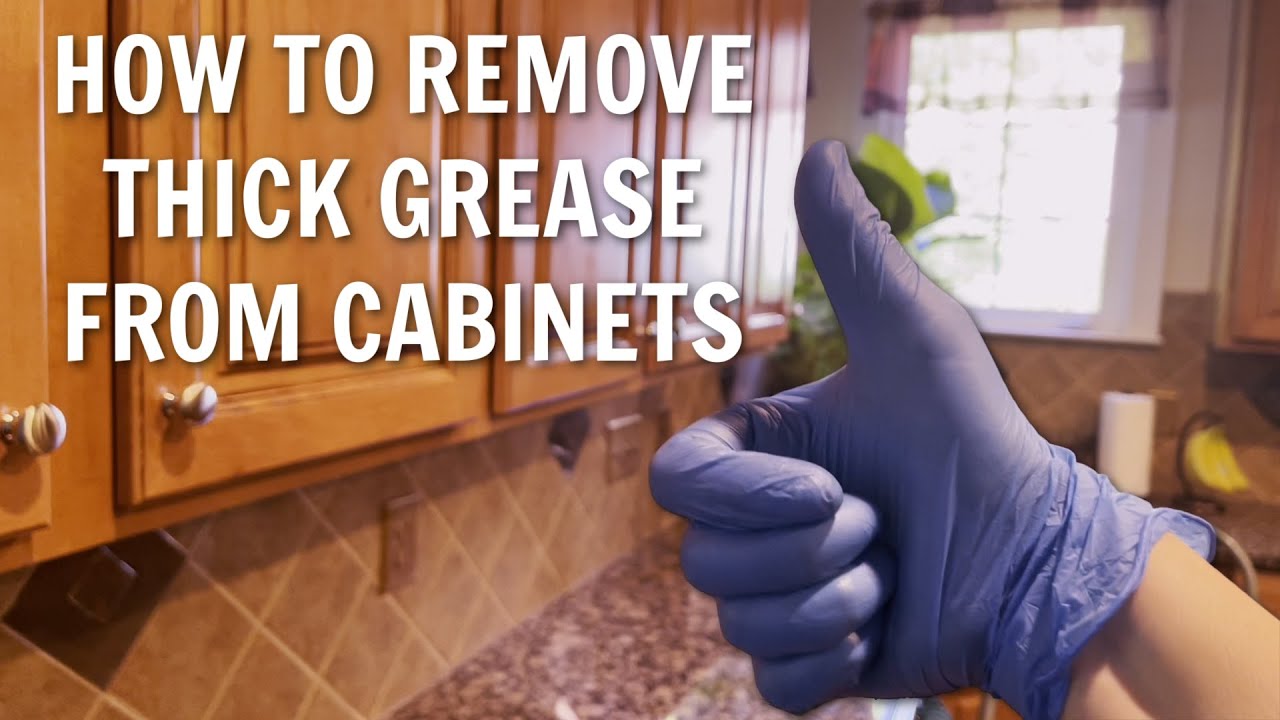
Credit: www.youtube.com
Causes Of Greasy Cabinets
Greasy kitchen cabinets often lose their shine and appeal quickly. The grease buildup usually comes from daily cooking activities. Understanding what causes this grease helps in cleaning and preventing it effectively.
Common Kitchen Grease Sources
Cooking oils and fats released during frying or sautéing stick to surfaces. Steam and smoke carry tiny grease particles that settle on cabinets. Food splatters and spills add to the greasy layer. Over time, these sources build up thick grease on cabinet surfaces.
Effects On Cabinet Surfaces
Grease attracts dust and dirt, making cabinets look dirty fast. It creates sticky, hard-to-remove patches that dull the finish. Prolonged grease buildup can damage paint or wood surfaces. This damage shortens the cabinet’s lifespan and increases cleaning difficulty.
Basic Cleaning Supplies
Basic cleaning supplies form the foundation for tackling greasy kitchen cabinets. Simple tools and gentle cleaners can remove grease without damaging cabinet surfaces. Using the right supplies ensures an effective and safe cleaning process.
These basic items are easy to find and affordable. They help break down grease while protecting your cabinets’ finish. Keep these supplies on hand for regular kitchen maintenance.
Mild Dish Soap And Warm Water
Mild dish soap mixed with warm water creates a gentle yet effective cleaning solution. This combination cuts through grease without harsh chemicals.
Mix a few drops of dish soap in a bucket of warm water. Dampen a soft cloth or sponge and wring out excess liquid. Wipe down the greasy cabinet surfaces carefully.
This method works well for light to moderate grease buildup. It’s safe for most cabinet materials and finishes.
Microfiber Cloths And Sponges
Microfiber cloths attract and hold grease, dirt, and dust better than regular cloths. They clean effectively without scratching surfaces.
Use a damp microfiber cloth for wiping cabinets after applying cleaning solution. For stubborn grease, use a sponge with a soft side. Avoid abrasive scrubbers that can damage the finish.
Microfiber cloths are reusable and easy to wash. They keep cabinets streak-free and shiny.
Non-scratch Scrub Brushes
Non-scratch scrub brushes provide extra scrubbing power on tough grease spots. They remove grease without harming cabinet wood or paint.
Choose brushes with soft nylon bristles. Use gentle circular motions to lift grease from corners and grooves. Avoid metal or stiff brushes that can scratch surfaces.
These brushes reach areas a cloth or sponge cannot. They help maintain your cabinets’ clean look over time.
Effective Degreasing Products
Greasy kitchen cabinets need powerful cleaning products to remove buildup. Choosing the right degreaser saves time and effort. Some products are gentle on wood, while others target tough grease quickly. This section covers effective degreasing products that make cabinet cleaning easier.
Murphy Oil Soap Benefits
Murphy Oil Soap cleans grease without damaging wood surfaces. It works well on painted and stained cabinets. The formula is gentle but removes dirt and grime efficiently. It also leaves a pleasant, natural scent. Use it diluted with water for best results. Murphy Oil Soap helps maintain your cabinets’ finish while cleaning thoroughly.
Using Dawn Powerwash
Dawn Powerwash is a ready-to-use spray that cuts through grease fast. Spray it directly on greasy spots for quick action. It loosens thick grease, making it easier to wipe away. Dawn Powerwash works on various cabinet materials, including laminate and wood. It dries quickly and requires no rinsing. This product is ideal for busy kitchens needing fast cleaning.
Alternative Commercial Degreasers
Other commercial degreasers also remove kitchen grease effectively. Products like Goo Gone and Pratt Cutter target sticky residue and buildup. These degreasers often contain powerful solvents, so test on a small area first. Use a soft cloth to apply and avoid harsh scrubbing. Alternative degreasers offer options for different cabinet types and grease levels.
Step-by-step Cleaning Process
Cleaning greasy kitchen cabinets can seem tough. A clear step-by-step process makes it easier. Following simple steps helps remove grease without damage. This guide shows how to clean your cabinets effectively and safely.
Preparing The Cleaning Solution
Start by mixing mild dish soap with warm water. Use about one tablespoon of soap per cup of water. Stir gently to combine. Avoid harsh chemicals that can damage cabinet surfaces. Prepare enough solution to clean all cabinet areas.
For heavy grease, consider a commercial degreaser like Murphy Oil Soap. These are designed to break down grease quickly. Always test on a small hidden spot first. This prevents discoloration or damage.
Applying And Scrubbing Grease Spots
Dampen a soft cloth or sponge with the cleaning solution. Wring it out to avoid dripping water on wood. Gently wipe the cabinet surfaces in a circular motion. Focus on greasy spots and areas near the stove.
Use a non-scratch scrub brush for tough grease patches. Scrub carefully to avoid scratching the finish. Reapply cleaning solution as needed. Let the solution sit for a few minutes on stubborn grease before scrubbing again.
Rinsing And Drying Cabinets
After scrubbing, wipe cabinets with a clean damp cloth. This removes soap residue and loosened grease. Use plain warm water for rinsing. Avoid soaking the wood to prevent damage.
Dry the cabinets immediately with a soft, dry towel. This stops water stains and keeps wood healthy. Open windows or use a fan to speed drying. Your cabinets will look fresh and clean after this step.
Tools For Detailed Cleaning
Cleaning greasy kitchen cabinets requires the right tools for detailed cleaning. Simple cloths and sponges may miss dirt in tight spaces. Choosing the right cleaning tools helps remove grime effectively. It also protects the cabinet surface from damage. Use tools designed for precision and gentle cleaning. This section explains useful tools to clean every corner of your cabinets.
Microfiber Cloth Advantages
Microfiber cloths attract and hold grease better than regular cloths. Their fine fibers trap dirt without spreading it around. They clean gently, so cabinets stay scratch-free. Microfiber cloths dry quickly and resist bacteria growth. They work well with water or cleaning solutions. These cloths make cleaning faster and more thorough.
Detail Brushes For Corners
Detail brushes reach narrow spaces and crevices in cabinets. Their small size helps clean corners, edges, and trims easily. Soft-bristle brushes avoid damaging cabinet paint or finish. Use them to loosen dirt in grooves and joints. They also help clean handles and hinges. Brushes improve cleaning in spots cloths cannot reach.
Using Scrub Sponges Safely
Scrub sponges add scrubbing power for tough grease spots. Choose non-scratch sponges to protect cabinet surfaces. Avoid harsh scrubbing that might strip paint or finish. Wet the sponge before use to reduce friction. Test on a hidden area first to check for damage. Use gentle pressure to remove grease without harm.

Credit: mypinterventures.com
Precautions And Testing
Cleaning greasy kitchen cabinets requires care and attention. Before applying any cleaning product, take precautions to protect your cabinet surfaces. Testing helps prevent damage and ensures effective cleaning. These steps save time and keep cabinets looking fresh.
Spot Testing Cleaning Products
Always test cleaning products on a small, hidden area first. This spot test shows how the product reacts with your cabinet finish. Use a cotton swab or soft cloth to apply a small amount. Wait a few minutes. Check for discoloration, peeling, or damage. If no harm appears, it is safe to use on the entire cabinet.
Avoiding Damage To Cabinet Finishes
Choose gentle cleaners that match your cabinet material. Avoid abrasive pads or harsh chemicals that can strip paint or varnish. Use soft cloths or sponges to wipe surfaces. Do not soak wood cabinets with water. Dry cabinets immediately after cleaning. These steps help maintain the cabinet’s shine and protect its finish.
Removing Stubborn Grease
Removing stubborn grease from kitchen cabinets takes patience and the right approach. Grease builds up over time and clings tightly to surfaces. Simple wiping often does not remove it completely. Deep cleaning is necessary to restore your cabinets’ shine.
Using targeted techniques can break down the thick grease layers. Combining scrubbing with effective cleaners makes a big difference. This section covers extra scrubbing methods and specialized degreasers that work best.
Extra Scrubbing Techniques
Start by dampening a soft cloth with warm soapy water. Use mild dish soap to cut through grease without harming the finish. For tough spots, a non-scratch scrub brush helps remove buildup gently.
Apply circular motions when scrubbing to lift grease. Avoid harsh scrubbing that can damage cabinet surfaces. For textured or detailed areas, a soft-bristled toothbrush reaches grease in crevices.
Rinse the cloth often and replace the cleaning solution if it becomes greasy. Pat dry the cabinets with a microfiber towel to prevent streaks and water damage.
Using Specialized Degreasers
Specialized degreasers target grease more effectively than soap alone. Choose products made for kitchen use and safe on wood or laminate finishes. Popular options include Murphy Oil Soap and Dawn Powerwash.
Spray the degreaser directly on greasy spots and let it sit for a few minutes. This softens the grease for easier removal. Wipe clean with a damp cloth and dry thoroughly afterward.
Test any degreaser on a hidden area first. This prevents discoloration or damage. Use gloves and ventilate the room well to avoid irritation from strong chemicals.
Preventing Future Grease Buildup
Preventing future grease buildup on kitchen cabinets keeps them looking fresh and clean longer. Simple habits reduce sticky residue and make cleaning easier. Focus on quick actions and protective measures to guard your cabinets daily.
Immediate Spill Cleanup
Wipe spills right away to stop grease from settling. Use a damp cloth with mild soap for best results. Quick cleanup prevents stains from hardening on cabinet surfaces.
Protective Barriers Near Stove
Place splatter guards or clear films on cabinets close to the stove. These barriers catch grease before it reaches cabinet surfaces. They are easy to clean or replace when dirty.
Regular Maintenance Routines
Wipe cabinets weekly with a gentle cleaning solution. This removes small grease layers before buildup occurs. Consistent care keeps your kitchen cabinets shining and fresh.
Natural And Diy Alternatives
Natural and DIY alternatives offer safe, effective ways to clean greasy kitchen cabinets. These methods use simple ingredients you likely have at home. They avoid harsh chemicals and leave your kitchen fresh and clean. These solutions are budget-friendly and easy to make. Let’s explore two popular options for tackling grease naturally.
Vinegar And Baking Soda Solutions
Mix equal parts white vinegar and warm water in a spray bottle. Spray the solution on greasy cabinets and let it sit for a few minutes. Wipe the surface with a soft cloth to lift away grease.
For tougher stains, sprinkle baking soda on a damp sponge. Gently scrub the greasy areas, then wipe clean with a vinegar-water spray. This combination breaks down grease and removes odors without damage.
Lemon-based Cleaners
Lemon juice naturally cuts through grease with its acidity. Mix lemon juice with water in a 1:2 ratio. Apply the mixture to cabinets using a cloth and wipe away grease buildup.
You can also rub half a lemon directly on greasy spots for quick cleaning. Let it sit for a few minutes, then wipe with a damp cloth. Lemon leaves a fresh, clean scent and shines cabinet surfaces.
Maintaining Cabinet Shine
Maintaining the shine of your kitchen cabinets keeps your space looking fresh and inviting. Greasy buildup dulls the surface and makes cabinets look old. Regular care restores their natural glow and protects the finish. Simple polishing and cleaning habits help maintain that beautiful shine.
Polishing Tips For Wood Cabinets
Use a soft cloth to apply polish gently. Choose a polish made for wood surfaces only. Avoid using too much product; a little goes a long way. Wipe in the direction of the wood grain to enhance the natural look. Buff the surface with a clean, dry cloth for extra shine. Apply polish every few weeks to keep cabinets looking new.
Avoiding Residue And Streaks
Use a damp, not wet, cloth to clean cabinets first. Harsh cleaners leave streaks and damage finishes. Rinse your cloth often to remove dirt and soap. Dry cabinets immediately after wiping to prevent water marks. Avoid paper towels; they can leave lint and scratches. Finish by buffing with a dry microfiber cloth for a smooth, streak-free shine.
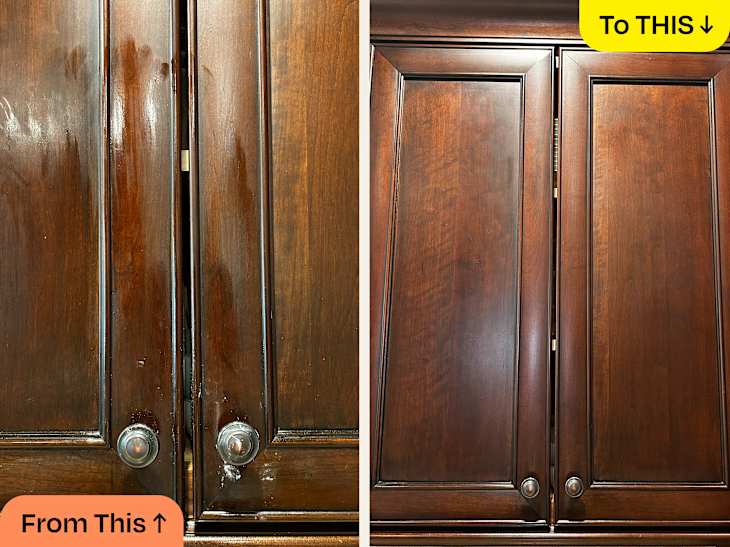
Credit: www.thekitchn.com
Frequently Asked Questions
What Is The Best Thing To Clean Greasy Kitchen Cabinets With?
Use a mild dish soap mixed with warm water or commercial degreasers like Murphy Oil Soap or Dawn Powerwash. Wipe with a microfiber cloth for best results. For tough grease, scrub gently with a non-scratch brush or apply a dedicated degreaser.
Rinse and dry thoroughly.
How Do You Remove Years Of Grease Buildup?
Remove years of grease buildup by scrubbing with warm water and mild dish soap. Use microfiber cloths and commercial degreasers for tough spots. Rinse with clean water and dry thoroughly to prevent streaks and damage. Regular cleaning helps avoid future buildup effectively.
Does Murphy’s Oil Soap Remove Grease From Wood Cabinets?
Murphy’s Oil Soap effectively removes grease from wood cabinets. Use it with a damp cloth for gentle, thorough cleaning. Rinse and dry cabinets after cleaning to avoid residue.
How To Degrease Wood Kitchen Cabinets Without Damaging The Finish?
Mix mild dish soap with warm water. Use a damp microfiber cloth to gently wipe cabinets. For stubborn grease, apply Murphy Oil Soap or Dawn Powerwash. Always test products on a small area first. Rinse with a clean damp cloth and dry immediately to protect the finish.
Conclusion
Cleaning greasy kitchen cabinets does not have to be hard. Use mild soap and warm water for regular cleaning. For tough grease, try commercial degreasers carefully. Always test products on small spots first. Use soft cloths or brushes to avoid scratches.
Wipe, rinse, and dry cabinets well after cleaning. These simple steps keep cabinets looking fresh and clean. Enjoy a shiny kitchen without much effort. Keep up with regular cleaning to prevent grease buildup. Your kitchen will stay bright and welcoming every day.