
If you’ve ever wondered how to make coffee with an espresso machine, you’re in the right place. Whether you want a bold shot of espresso or a creamy latte, mastering your espresso machine can transform your daily coffee routine.
Imagine waking up to the rich aroma of freshly brewed espresso crafted exactly to your taste—no more waiting in line at the coffee shop or settling for mediocre instant coffee. This guide will walk you through every step, from preparing the machine to pulling the perfect shot and frothing milk like a pro.
By the end, you’ll have the confidence to create café-quality coffee right in your own kitchen. Ready to unlock the full potential of your espresso machine? Let’s dive in.
Credit: www.casabrews.com
Choosing Beans
Choosing the right beans is key to making great espresso. Beans affect the taste, aroma, and body of your coffee. Selecting beans meant for espresso machines can enhance your coffee experience. Understanding the differences between espresso and regular coffee beans helps you pick the best option. Roast level also plays a big role in flavor. Knowing what roast suits your taste makes a big difference.
Espresso Vs Regular Coffee Beans
Espresso beans are usually a blend of different coffee types. They are roasted to bring out rich and bold flavors. Regular coffee beans can be lighter and less intense. Espresso beans are ground finer for the machine’s pressure. Regular coffee uses a coarser grind. Using espresso beans in an espresso machine gives better crema and taste. Regular coffee beans may not extract well under high pressure. For a true espresso flavor, use beans labeled for espresso.
Roast Levels And Flavor Profiles
Dark roasts are common for espresso. They have a strong, smoky flavor and less acidity. Medium roasts balance brightness with body and sweetness. Light roasts keep more of the original coffee flavors and acidity. Choose dark roast for a classic, intense espresso. Pick medium or light roasts if you want more fruity or floral notes. Freshness matters too; use beans roasted within the last few weeks. Store beans in an airtight container to keep flavors fresh.
Preparing The Machine
Preparing the espresso machine is the first step to making great coffee. This process ensures your machine works well and your coffee tastes fresh. Proper preparation also helps protect your machine and extend its life.
Filling The Water Tank
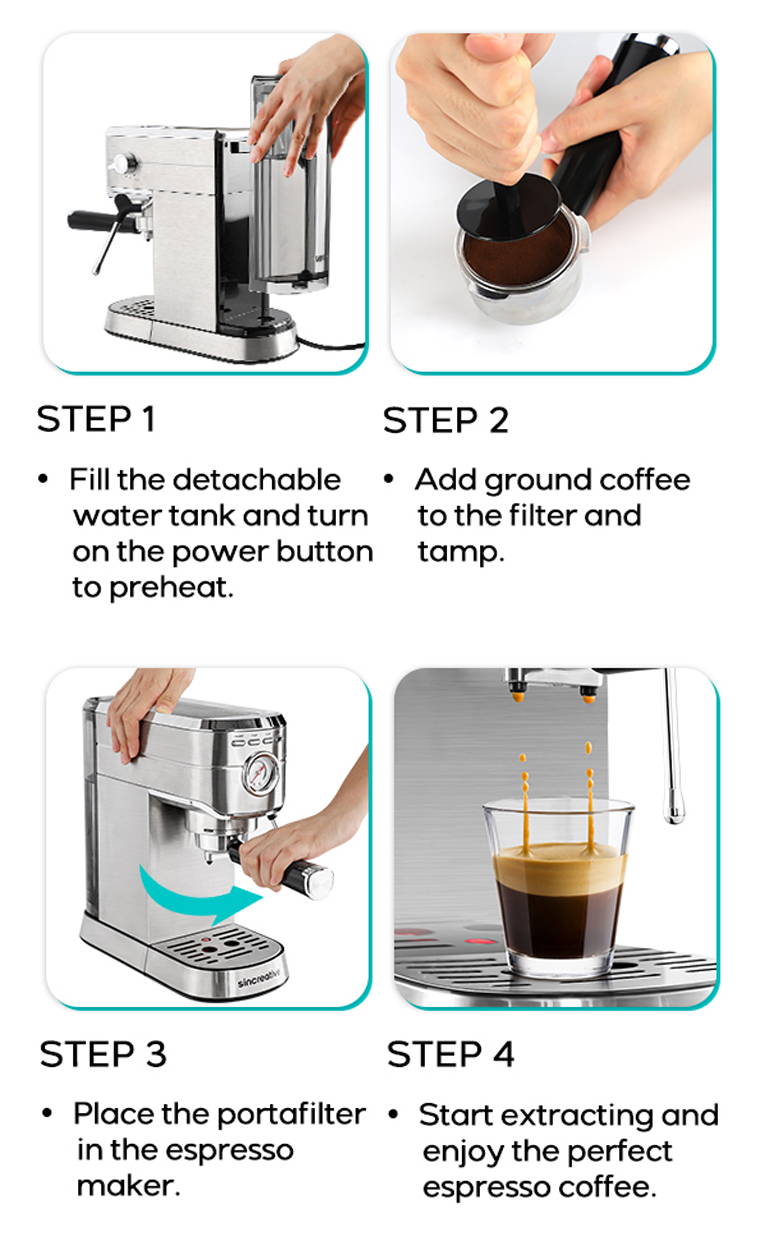
Start by removing the water tank from the machine. Fill it with fresh, cold water. Avoid using distilled or softened water for better flavor. Place the tank back securely to prevent leaks.
Preheating The Espresso Machine
Turn on the espresso machine to begin warming up. Allow it to heat for about 15 to 30 minutes. Preheating stabilizes the temperature for a balanced extraction. This step improves the coffee’s taste and crema quality.
Cleaning The Group Head
Remove the portafilter from the group head. Use a clean cloth or brush to wipe away old coffee grounds. Run water through the group head to flush out any residue. This keeps the machine clean and prevents bitter flavors.
Grinding Coffee
Grinding coffee is a crucial step in making espresso. The grind size affects the flavor and extraction time. Too fine, and the coffee tastes bitter. Too coarse, and it will be weak and watery. Freshly grinding beans just before brewing gives the best results. It preserves the aroma and oils that make espresso rich and full-bodied.
Selecting The Right Grind Size
Espresso requires a fine grind size. The texture should feel like powdered sugar. This allows water to pass through slowly and extract maximum flavor. Adjust grind size if the shot pulls too fast or too slow. A fast shot means the grind is too coarse. A slow shot means it is too fine. Finding the right grind takes some trial and error.
Using A Burr Grinder
Burr grinders crush beans evenly. They produce consistent particle sizes. This consistency helps avoid over or under-extraction. Blade grinders chop beans unevenly, which can spoil the taste. Burr grinders come in manual and electric types. Choose one that fits your budget and needs. Clean the grinder regularly to keep flavors fresh.
Dosing And Tamping
Dosing and tamping are crucial steps in making espresso with your machine. They control the amount and density of coffee grounds. Proper dosing and tamping ensure even water flow. This leads to a balanced and rich espresso shot. Skipping these steps or doing them poorly can make your coffee taste weak or bitter.
Measuring The Coffee Grounds
Start by measuring the right amount of coffee grounds. Use a small scale for accuracy. Most machines need about 18 to 20 grams of coffee. Too little coffee makes the espresso weak. Too much can cause the machine to clog.
Distributing Grounds Evenly
After dosing, spread the grounds evenly in the portafilter. Use your finger or a small tool to level the surface. Even distribution prevents water from channeling through weak spots. This creates a smooth and consistent extraction.
Applying Consistent Pressure
Next, use a tamper to press the grounds firmly. Press straight down with about 30 pounds of pressure. Keep the tamper level to avoid uneven extraction. Consistent pressure packs the grounds tightly. This helps the water flow evenly through the coffee.
Pulling The Shot
Pulling the shot is the heart of making espresso with your machine. It means extracting the rich, concentrated coffee from the finely ground beans. This step requires care and precision to get the perfect flavor and crema. A good shot makes a big difference in your coffee’s taste and texture.
Locking The Portafilter
Start by locking the portafilter firmly into the group head. Make sure it fits snugly and is secure. This prevents water from leaking and ensures even pressure during extraction. A loose portafilter can cause weak or uneven coffee.
Starting The Extraction
Turn on the machine to start the water flow through the coffee grounds. Hot water will pass through the portafilter under pressure. Watch as the dark espresso begins to flow into your cup. The stream should look smooth and consistent, not too fast or slow.
Timing The Shot
Timing is key for a balanced espresso shot. Aim for about 25 to 30 seconds of extraction. Too short and the coffee will taste sour and weak. Too long and it will be bitter. Use a timer to keep track and stop the shot at the right moment.
Frothing Milk
Frothing milk is an essential skill for making many espresso drinks. It adds creaminess and texture to your coffee. Properly frothed milk enhances the flavor and mouthfeel of beverages like lattes and cappuccinos.
Learning to froth milk helps you create café-quality drinks at home. The process involves using steam to heat and aerate the milk, forming a smooth, velvety foam. This foam is called microfoam and is key to a great espresso drink.
Using The Steam Wand
Start by filling a small pitcher with cold milk. Use whole or 2% milk for best results. Insert the steam wand just below the milk surface. Turn on the steam to introduce air and heat the milk.
Keep the wand near the surface at first to create foam. Then, submerge it deeper to heat the milk evenly. Move the pitcher slowly to create a whirlpool effect. This helps mix air and heat evenly.
Turn off the steam before removing the wand. Wipe the wand with a clean cloth to remove milk residue. Purge the steam wand briefly to clear any leftover milk inside.
Creating Microfoam
Microfoam is smooth, fine-textured foam with tiny bubbles. It adds a silky feel to drinks. To create microfoam, keep the steam wand just below the milk surface.
Listen for a gentle hissing sound. This means air is mixing well with the milk. Avoid loud splashing or large bubbles. The goal is small, even bubbles for a creamy texture.
Keep swirling the milk to blend air and heat. Stop steaming when the pitcher feels warm but not too hot, about 140°F (60°C). Overheating can spoil the milk taste.
Milk Textures For Different Drinks
Different espresso drinks need different milk textures. For a latte, use smooth microfoam with little foam on top. The milk should be creamy and pour easily.
Cappuccinos require thick, frothy foam that holds its shape. Aim for a foam that is about half the drink volume. It should be light and airy but still creamy.
For flat whites, the milk texture is very smooth and velvety with little foam. The goal is a thin layer of microfoam that blends perfectly with the espresso.
Adjust your technique based on the drink you want. Practice helps you find the right balance of heat and foam for each style.
Brewing Common Espresso Drinks
Brewing espresso drinks at home brings café flavors to your kitchen. Each drink starts with a well-pulled espresso shot. From there, milk and foam shape the final taste and texture. Knowing how to prepare common espresso beverages helps you enjoy your machine fully.
Making A Basic Espresso
Start by filling the water tank and turning the machine on. Grind fresh espresso beans to a fine texture. Place the grounds into the portafilter and distribute them evenly. Use a tamper to press the coffee firmly. Lock the portafilter into the machine.
Start the extraction and watch the espresso flow. A good shot pours slowly, rich and golden. Aim for about 25-30 seconds for extraction. Stop the shot when it turns pale or watery. Serve immediately for the best flavor.
Preparing A Latte
Pull a fresh espresso shot into your cup. Pour cold milk into a frothing pitcher. Use the steam wand to heat and froth the milk. Keep the wand just below the milk surface to create foam. Stop frothing when the milk feels warm and smooth.
Pour the steamed milk over the espresso slowly. Hold back the foam with a spoon. Finally, spoon a thin layer of foam on top. This creates the creamy texture a latte is known for.
Crafting A Cappuccino
Begin with a fresh espresso shot in a small cup. Froth cold milk until it doubles in volume. The foam should be thick and velvety. Pour the hot milk into the espresso carefully. Hold back the foam with a spoon at first.
Top the drink with a thick layer of milk foam. The foam should be dense enough to hold its shape. This balance of espresso, milk, and foam defines a classic cappuccino.
Troubleshooting
Troubleshooting an espresso machine can improve your coffee quality. Small changes fix common issues. Understanding these fixes saves time and money. Try different solutions step by step. Watch how your coffee changes. Enjoy better espresso every time.
Fixing Bitter Or Sour Shots
Bitter espresso tastes harsh and unpleasant. Sour shots taste sharp and acidic. Bitter shots often result from over-extraction. Reduce brewing time or lower the temperature. Sour shots happen with under-extraction. Increase brewing time or raise the temperature. Adjust shot time between 25 to 30 seconds. Check water quality for better taste.
Adjusting Grind And Dose
Grind size affects espresso flavor and texture. Fine grind slows water flow and extracts more. Coarse grind speeds flow and extracts less. Start with medium-fine grind for best balance. Dose means the coffee amount in portafilter. Use 18 to 20 grams for double shots. More coffee makes stronger espresso. Less coffee makes weaker espresso. Adjust grind and dose together for perfect shots.
Cleaning And Maintenance Tips
Clean your espresso machine regularly to avoid faults. Remove coffee oils and residue from group head and portafilter. Use a brush to clean grinder burrs and baskets. Flush the machine daily with hot water. Descale the machine monthly to remove mineral buildup. Clean steam wand after every use. Proper maintenance keeps espresso taste fresh. It also extends machine life.
Extra Tips
Perfecting espresso requires more than just following basic steps. These extra tips will help you improve your coffee experience. Paying attention to small details makes a big difference. From bean freshness to machine settings, every part matters.
Maintaining Fresh Beans
Fresh beans create the best espresso flavor. Buy whole beans and grind them just before brewing. Store beans in an airtight container away from light and heat. Avoid buying large amounts that take too long to use. Using old beans can cause flat or bitter taste.
Consistent Tamping Techniques
Tamping packs the coffee grounds evenly. Use a tamper that fits your portafilter properly. Press down with steady, even pressure each time. Uneven tamping leads to poor water flow and weak espresso. Aim for around 30 pounds of pressure for best results.
Optimizing Machine Settings
Adjust your espresso machine settings for better shots. Set the right water temperature, usually between 195°F and 205°F. Control the grind size to match your machine’s pressure. Fine-tune the shot time, aiming for 25-30 seconds. Experiment with settings to find your preferred taste.

Credit: beanbox.com

Credit: coffeeculture.asia
Frequently Asked Questions
How To Make A Regular Coffee With An Espresso Machine?
Fill the espresso machine’s water tank and heat it. Use espresso grounds, tamp evenly in the portafilter. Brew a shot, then dilute with hot water for regular coffee. Froth milk if desired. Clean the machine after use for best results.
Can I Use My Espresso Machine To Make Coffee?
Yes, you can use an espresso machine to make coffee, but it works best with finely ground espresso beans. Regular coffee grounds may not extract well, resulting in weaker flavor. For optimal taste, use beans ground specifically for espresso and follow proper tamping and brewing techniques.
Can I Use Espresso Coffee As Regular Coffee?
You can use espresso coffee as regular coffee, but it tastes stronger and more concentrated. Dilute with hot water for a milder cup.
Does An Espresso Machine Also Make Regular Coffee?
An espresso machine brews espresso using finely ground coffee under pressure. It can make regular coffee but results vary. For better regular coffee, use a drip or French press. Some machines have a setting to brew longer shots for a milder taste closer to regular coffee.
Conclusion
Making coffee with an espresso machine is simple with practice. Follow each step carefully for best results. Use fresh beans ground for espresso, not regular coffee. Keep your machine clean and tamp grounds evenly. Frothing milk adds a creamy touch to your drink.
Adjust grind size if the taste is off. Enjoy your rich and flavorful espresso at home. Keep trying, and your skills will improve quickly. Brewing coffee this way saves money and tastes great.