
You love your morning coffee, but when was the last time you gave your coffee maker a proper clean? Over time, mineral buildup and leftover coffee oils can affect the taste of your brew and even damage your machine.
Luckily, there’s a simple, effective way to keep your coffee maker fresh and working like new—using vinegar. But what is the best way to clean a coffee maker with vinegar? You’ll discover easy, step-by-step instructions that will help you remove stubborn residue, improve your coffee’s flavor, and extend the life of your machine.
Keep reading to learn how vinegar can be your coffee maker’s best cleaning friend!
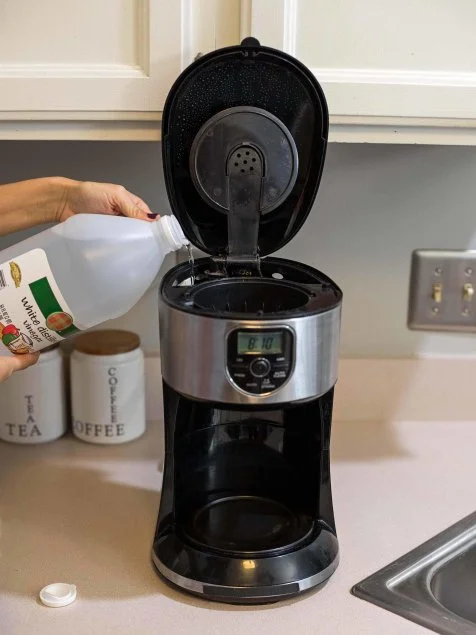
Credit: www.hgtv.com
Why Use Vinegar To Clean Coffee Makers
Cleaning a coffee maker regularly keeps your coffee tasting fresh and your machine working well. Vinegar is a popular choice for cleaning coffee makers. Its natural properties help remove buildup without harsh chemicals. Using vinegar is safe, easy, and cost-effective. It also prevents mineral deposits that affect flavor and machine function.
Benefits Of Vinegar
Vinegar dissolves mineral deposits like calcium and lime from water. It kills bacteria and mold inside the machine. Vinegar is non-toxic and safe for the environment. It leaves no strong chemical smell after cleaning. Using vinegar helps extend the life of your coffee maker. It also keeps coffee tasting pure and fresh.
Vinegar Vs Other Cleaners
Many cleaners contain harsh chemicals that can damage the coffee maker. Vinegar is gentle yet effective against buildup and stains. It costs much less than specialized cleaning products. Other cleaners may leave residues that affect coffee flavor. Vinegar is widely available and easy to use. It cleans without risking harm to your machine or health.
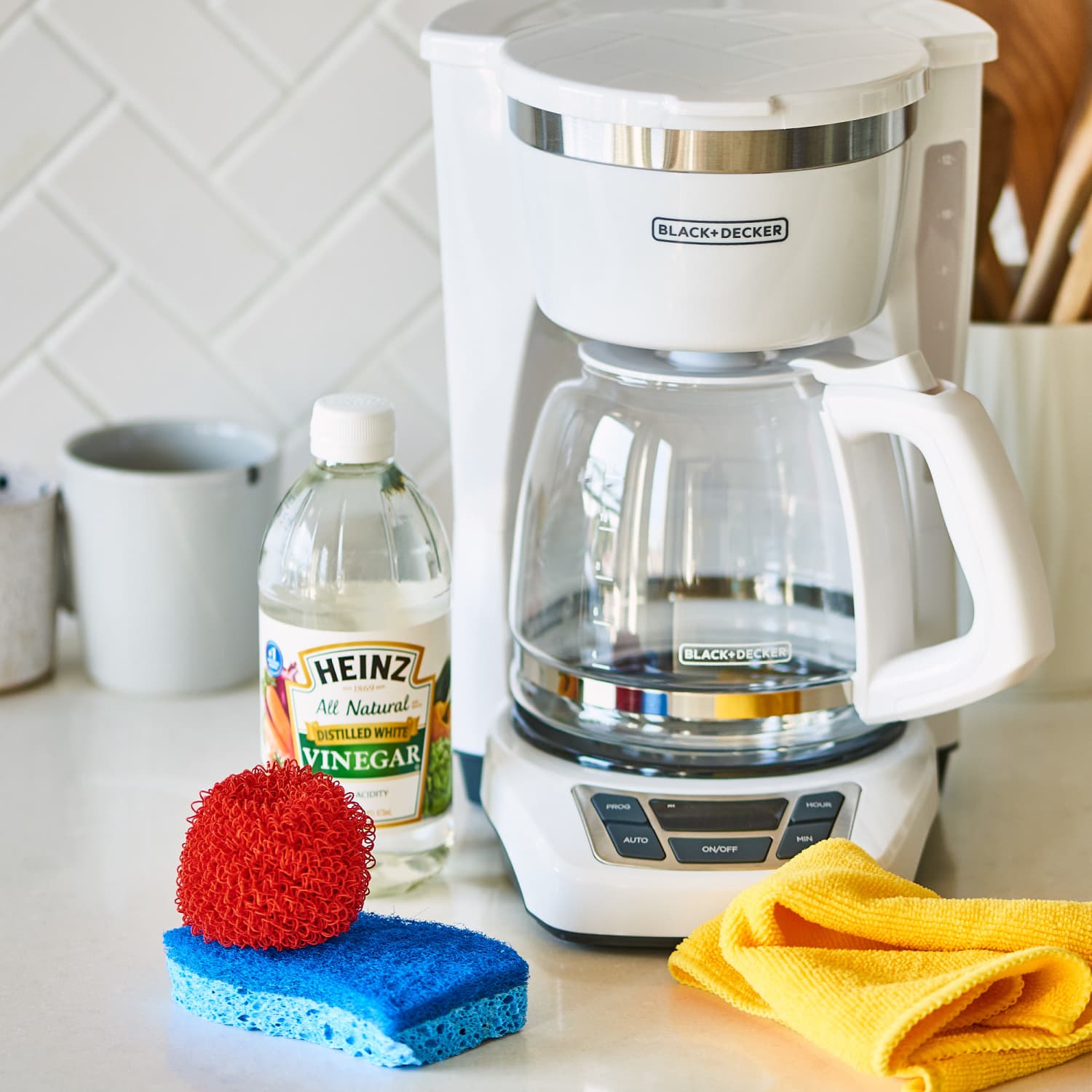
Credit: www.thekitchn.com
Preparing Your Coffee Maker For Cleaning
Preparing your coffee maker for cleaning is essential for a thorough result. Before using vinegar, clear out any old coffee residue. This step helps vinegar reach and remove scale and buildup effectively.
Start by removing all coffee grounds and filters. Then empty the water reservoir to avoid mixing old water with the cleaning solution. These simple steps set the stage for a deep clean.
Removing Coffee Grounds And Filters
Take out the coffee filter carefully. Dispose of used coffee grounds to prevent bad smells. Rinse the filter basket with warm water. This removes leftover oils and particles. A clean basket helps vinegar work better.
Emptying The Water Reservoir
Open the water reservoir lid. Pour out any water inside. Wipe the inside with a soft cloth if needed. This removes dust and debris. An empty reservoir ensures the vinegar solution fills completely.
Mixing The Vinegar Solution
Mixing the vinegar solution is a key step in cleaning your coffee maker effectively. The right mixture helps remove mineral build-up and kills bacteria. Preparing the solution correctly ensures a thorough clean without harming your machine.
Choosing The Right Vinegar
White distilled vinegar is the best choice for cleaning coffee makers. It has a strong acidity that breaks down mineral deposits quickly. Avoid using flavored or apple cider vinegar, as they can leave residues and smells. Plain white vinegar is safe, affordable, and widely available.
Ideal Vinegar-to-water Ratio
Mix equal parts of white vinegar and water for the best cleaning solution. A 50/50 ratio is strong enough to remove scale but gentle enough to protect your machine. Fill your coffee maker’s reservoir with this mixture before running a cleaning cycle. Too much vinegar can cause damage, and too little may not clean well.
:max_bytes(150000):strip_icc()/clean-coffee-maker-with-vinegar-1907384_FINAL-3af08744866e446da1d71fb372e8270c.png)
Credit: www.thespruce.com
Step-by-step Cleaning Process
Cleaning your coffee maker with vinegar is simple and effective. Following the step-by-step process ensures a thorough clean. This method removes mineral buildup and improves coffee taste. Keep your machine working well by cleaning regularly.
Filling The Reservoir
Start by emptying the coffee maker. Remove any old coffee grounds and filters. Mix equal parts white vinegar and water. Pour the mixture into the water reservoir. This solution will break down mineral deposits inside the machine.
Starting The Brew Cycle
Turn on the coffee maker to start brewing. Let the vinegar mixture run through the machine. This helps clean the internal parts and water lines. Do not add coffee grounds at this stage.
Pausing And Soaking
Halfway through the brew cycle, pause the machine. Let the vinegar solution sit inside for about 30 minutes. This soaking time loosens stubborn deposits and buildup. After soaking, resume the brew cycle to finish cleaning.
Completing The Brew Cycle
Allow the brew cycle to fully complete. Once done, discard the vinegar mixture from the carafe. Rinse the carafe and filter basket with warm, soapy water. Run two or three cycles with clean water to rinse out vinegar taste.
Rinsing And Final Touches
After running the vinegar cleaning cycle, focus on rinsing and final touches. This step ensures no vinegar taste remains in your coffee maker. Proper rinsing protects the flavor of your next brew and keeps your machine in good condition.
Running Fresh Water Cycles
Fill the water reservoir with fresh, clean water only. Run a full brewing cycle without coffee grounds. This flushes out leftover vinegar and loosens any residue inside. Repeat this fresh water cycle two to three times. Your coffee maker should smell fresh and clean afterward.
Cleaning Removable Parts
Remove the carafe, filter basket, and any other detachable parts. Wash them thoroughly with warm, soapy water. Rinse well to remove soap traces. Dry parts completely before placing them back. This step removes lingering vinegar and coffee oils. It also keeps all parts hygienic and fresh.
Tips To Maintain A Clean Coffee Maker
Keeping your coffee maker clean ensures better tasting coffee and longer machine life. Regular care stops buildup of minerals and oils. Simple habits help maintain a fresh and efficient coffee maker.
Regular Descaling Schedule
Descale your coffee maker every one to three months. Use a vinegar and water mix to remove mineral deposits. This prevents clogging and keeps water flowing smoothly. Follow the cleaning steps carefully for best results. Set a reminder to avoid skipping this important step.
Using The Clean Function
Many coffee makers have a built-in clean button. Use this function with vinegar solution as directed by the manual. It runs a special cycle to remove scale and residue. This saves time and keeps your machine in good shape. Always rinse the machine well after the clean cycle.
Avoiding Common Mistakes
Do not use harsh chemicals or bleach to clean your coffee maker. Avoid running pure vinegar without water; it can damage parts. Never forget to remove coffee grounds before cleaning. Always rinse parts thoroughly to remove vinegar taste. Avoid letting water sit in the machine for long periods.
Alternative Vinegar Options
White vinegar is common for cleaning coffee makers, but apple cider or lemon juice also work well. These alternatives help remove mineral buildup and keep your machine fresh. Using a mix of water and vinegar ensures safe and effective cleaning without harsh chemicals.
Cleaning a coffee maker with vinegar is common and effective. Yet, not all vinegar types work the same. Some alternatives may offer different scents or cleaning strengths. Choosing the right vinegar can improve your cleaning results and protect your machine.
Vinegar’s acidity helps dissolve mineral deposits and remove buildup. White vinegar is the most popular choice due to its strong acidity and neutral smell. Apple cider vinegar is milder and has a fruity scent but still cleans well.
White Vinegar Vs Apple Cider Vinegar
White vinegar has a higher acidity level, around 5-7%. This makes it powerful for breaking down coffee stains and limescale. It does not leave any strong odors after rinsing.
Apple cider vinegar contains a small amount of natural sugars and a milder acidity of about 4-6%. It may leave a slight fruity smell after cleaning. It works well for light cleaning but may need longer contact time.
Both types kill bacteria and remove grime effectively. White vinegar is better for a deep clean. Apple cider vinegar suits regular maintenance or sensitive machines.
When To Avoid Vinegar
Vinegar is not safe for all coffee makers. Avoid vinegar with machines that have aluminum or special coatings. The acid can damage these materials.
Some manufacturers advise against using vinegar. Check your coffee maker’s manual before cleaning. Using vinegar wrongly can void warranties.
For delicate or high-end machines, use a cleaner made for coffee makers. Vinegar can corrode internal parts over time. Regularly inspect your machine for any wear.
Frequently Asked Questions
Can You Run Straight Vinegar Through A Coffee Maker To Clean It?
Running straight vinegar through a coffee maker can damage it and leave a strong odor. Use a 50/50 vinegar and water mix instead.
Is It Okay To Use Apple Cider Vinegar Instead Of White Vinegar For Cleaning?
Apple cider vinegar can clean but may leave a strong odor and residue. White vinegar is more effective and preferred for cleaning.
How Much Vinegar Do You Put In A 12 Cup Coffee Maker To Clean It?
Fill the 12-cup coffee maker reservoir halfway with white vinegar, then fill the rest with water. Run a full brew cycle.
What’s The Best Thing To Clean A Coffee Maker With?
Use a mixture of equal parts white vinegar and water to clean a coffee maker. Run a full brew cycle, then rinse with fresh water. This removes mineral buildup and cleans the machine effectively. Wash removable parts with warm, soapy water afterward for best results.
Conclusion
Cleaning your coffee maker with vinegar keeps it working well and tasting great. Vinegar removes mineral buildup and kills bacteria inside the machine. Use a mix of half vinegar and half water for the best results. Run the solution through a full brew cycle, then rinse with clean water.
Regular cleaning helps your coffee maker last longer and brew better coffee. Simple steps like these make a big difference in your daily coffee routine. Try this easy method to enjoy fresh, delicious coffee every day.